You are here: Home india
ocument Actions
About the ACM India Council

ACM has launched a new effort aimed at increasing the level and visibility of ACM activities across India. The ACM community in India is growing in membership, number of chapters, sponsored conferences and symposia.

Read the MemberNet India newsletter of ACM activities and people in India.

Read reports from the Compute 2012 conference in Pune and the ACM India Annual Meeting.

Special notice: ACM Professional Members in India can participate in two elections in the coming months.
  1. There will be elections for Office Bearers and Council Members of ACM. Statements and biographical sketches of all candidates will appear in the May 2012 issue of Communications of the ACM. Visit the ACM Elections page for more information and to view the slate.
  2. There will be the first elections for Council Members for ACM India. Statements and biographical details can be found on the Elections page of this site.
We urge all ACM Professional Members in India to vote in both elections.

The ACM India Council, a new organization within ACM, comprises a cross section of the computer science and information technology community committed to increasing the visibility and relevance of ACM in India. The council is focused on a wide range of ACM activities including:

  • serving as a professional network for individuals who are involved with the science and technology of computing
  • encouraging students to take an active interest in the emerging and exciting world of computing
  • facilitating the organization of high-quality ACM conferences in India
  • providing logistical support to grow more ACM professional and student chapters
  • enhancing access to the ACM Digital Library and publications for ACM members in India
  • increasing the participation of ACM members in India across all dimensions of ACM

New updates

  • Student Travel Award to Turing's 100th Anniversary programme
  • Read about ACM India Best Doctoral Dissertation Award (see tab above)

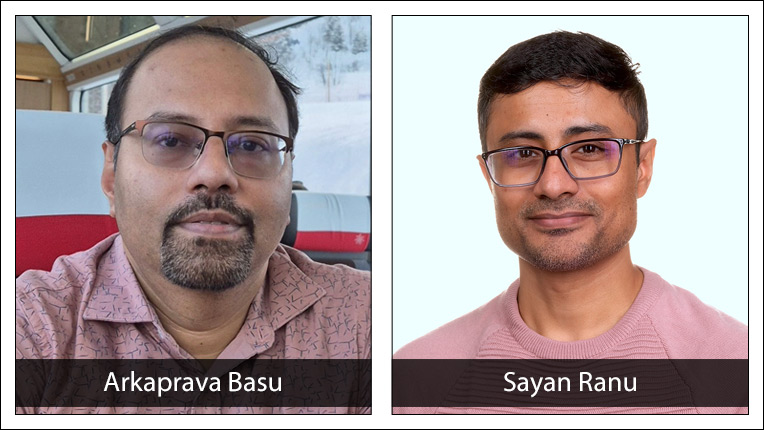
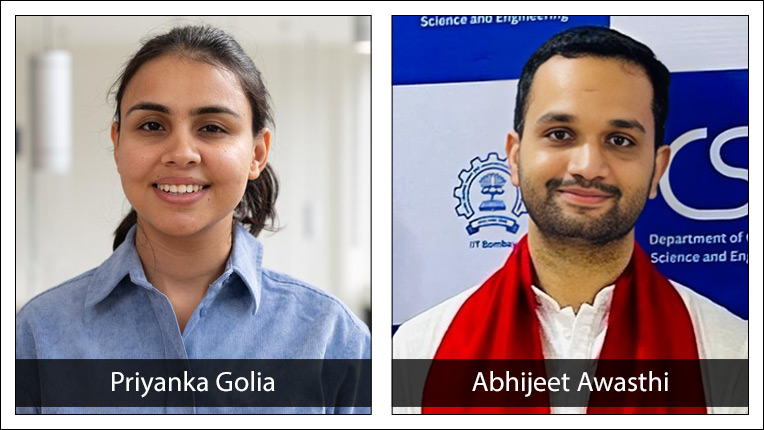
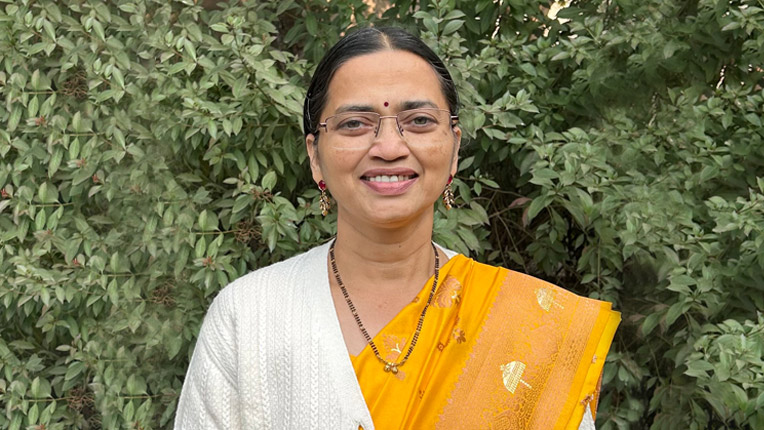
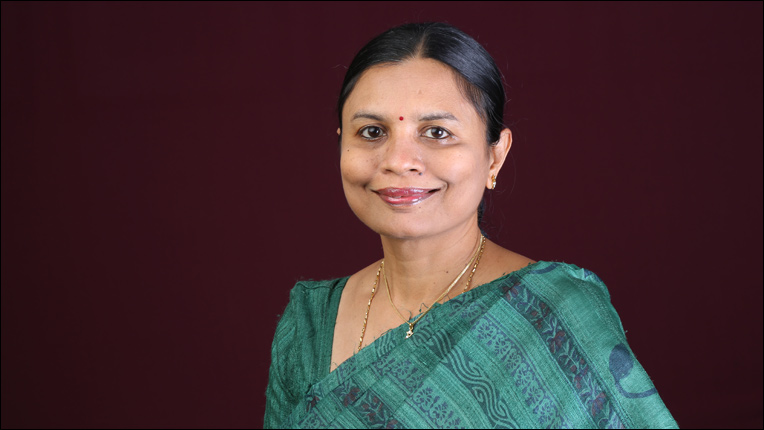
Council Members

There are an increasing number of ACM chapters across India. Each of these chapters has a series of technical events that will provide you with both interesting technical content and career networking opportunities.

Conferences

Current news and updates about the ACM Community in India are available on the LinkedIn group ACM India.

The ACM community in India is actively involved with a large number of conferences. Please see the Approved ACM Events in India listing page.

New updates

  • Student Travel Award to Turing's 100th Anniversary programme
  • Read about ACM India Best Dissertation Award (see tab above)

ACM India Best Doctoral Dissertation Award

The ACM India Best Doctoral Dissertation Award was established in 2011 by ACM India with approval from the ACM Awards Committee. This award recognizes the best doctoral dissertation from a degree-awarding institution based in India for each academic year, running from August 1st of one year to July 31st of the next.

Submissions

Each PhD granding institution based in India can nominate 1 student for the award each year. Institutions that produce more than 10 dissertations in the relevant areas per year can nominate 2 students in each year.

Deadline

Submissions must be received by August 31st of each year to qualify for consideration in that cycle.

Eligibility

Each nominated dissertation must have been defended successfully in an academic year between August 1st of one year and July 31st of the next to be considered for nomination. The nominations must reach ACM India before August 31st.

Endorsement

Each nomination shall be submitted by the thesis advisor with a one-page summary of the significance of the dissertation. The department head must also write a letter of endorsement.

Publication Rights

Each nomination must be accompanied by an assignment to ACM by the author of exclusive publication rights, as per ACM's copyright policies. Copyright will automatically revert to the authors whose dissertations are not selected.

Publication

Winning dissertations will be published in the ACM Digital Library.

Selection Procedure

Dissertations will be reviewed for technical depth and significance of the research contribution, potential impact on theory and practice, and quality of presentation. A committee of five individuals serving staggered five-year terms performs an initial screening to generate a short list, followed by an in-depth evaluation to determine the winning dissertation.

Award

The award will consist of a plaque and a cash component of Rs 2,00,000. In case of a joint award, the award amount can be shared among the recipients.

Nomination Procedure

Candidates are nominated by the department from which the PhD was completed.

Each nomination must include:

  1. Nomination letter by thesis advisor. This letter must include:

    • The name, address, and phone number of the advisor,

    • The name, mailing address and email address of the candidate, and

    • A one-page summary of the significance of the dissertation.

  2. An endorsement letter by the department head or a suitable substitute.

  3. One copy of the thesis in electronic format

  4. The record of publications in conferences and journals of the work reported in the dissertation along with their citations, if any.

  5. A copyright transfer form http://www.acm.org/pubs/copyright_form.html, signed by the candidate.

Optional

Supporting letters are helpful and a candidate can submit upto five supporting letters from individuals who know their work. Please ask the supporters to include their name, contact information, and telephone number.

Note

Please note that you do not need to mail in hard copies. All nomination materials may be submitted electronically (pdf or Word format) to the ACM India Doctoral Dissertation Coordinator at: emily.eng@acm.org. Submissions may be sent bundled in one email, it is not necessary to separate each category (nomination in one email, endorsement letter in another email, etc). The supporting letters need not come directly from the writer - candidates may collect all necessary materials and submit at one time.

ACM India Elections 2012

The four positions of office bearer are uncontested and the nominated candidates will take up their positions on 1 July 2012:

President: P. J. Narayanan (IIIT Hyderabad)
Vice President: Srinivas Padmanabhuni (Infosys, Bangalore)
Secretary: Mangala Gowri Nanda (IBM Research, Delhi)
Treasurer: Shekhar Sahasrabudhe (Persistent Systems, Pune)

There are 10 candidates standing for 6 positions of ACM India Council member. The nominations for the 6 ACM India Council positions are as follows:

Sangeeta Bhattacharya (Intel, Bangalore) Supratik Chakraborty (IIT Powai)
Madhavan Mukund (CMI Chennai) Ganesh Ramalingam (MSR India, Bangalore)
Maneesha Ramesh (Amrita U, Kollam) S Ramesh (GM ISC, Bangalore)
Rajeev Rastogi (Yahoo! India, Bangalore) Dheeraj Sanghi (IIT Kanpur)
Srikanth Sundararajan (Persistent Systems, Kolkata) R. Venkatesh (TRDDC)

The 6 elected candidates along with the 4 office bearers and the past President will form the new India Council from 1 July 2012.

Candidates' Backgrounds and Statements

pjnimg.jpg P J Narayanan is a Professor and Dean (R&D) at IIIT, Hyderabad. His research interests include Computer Vision, Graphics, and Parallel Computing. He got a BTech in CSE from IIT, Kharagpur in 1984 and a PhD in CS from the University of Maryland in 1992. He worked in CMC's Lipi group till 1986. He was a research faculty member in Carnegie Mellon University and worked on the Virtualized Reality project to capture dynamic events in 3D. He returned to India in 1996 to head the Computer Vision and Virtual Reality group of the Centre for Artificial Intelligence and Robotics (CAIR). He moved to IIIT-H in 2000. He played a key role in setting up and growing the research programmes at IIIT-H. Nvidia recognized him as a CUDA Fellow in 2008 for his pioneering efforts in GPU computing. He played a key role in establishing ICVGIP as a high-quality conference and in bringing ACCV06 to India. He has been associated with most major conferences in Computer Vision and Graphics and with IJCAI07.

Statement:
Access to computing and information has changed teaching, research, and work fundamentally. Corporations are global today; academia will follow suit. Quick access to global resources in each field will be critical to the advancement of individuals and organizations.

ACM has a very important role to play in this for computing. ACM had a low presence for quite a while in India. The newly-formed ACM India Council has made it more visible and accessible to a wider cross-section of the people. I have been a part of this as ACM India Co-Chair since its inception. I am satisfied with the momentum generated, but would like to amplify it in the coming years.

India has about a million students of computing and perhaps over 2 million professionals. I would like to make ACM relevant and useful in the lives of students, researchers, and professionals in India. ACM can truly become the voice of the Indian computing community. I appeal to the computing community to join us in making this happen.


srinivas.jpg Srinivas Padmanabhuni is a Principal Research Scientist and Associate Vice President at Infosys Labs, the research and innovation arm of Infosys Technologies, Bangalore. He has three patents and filed 15 patent applications, one published book by Wiley, several book chapters, multiple journal and conference papers, in addition to invited talks and editorial positions.

He supervises Software Engineering research at Infosys and works on Web services, Service Oriented Architecture, Business Process Management, and Grid technologies with interests in semantic web, autonomic computing, intelligent agents, and enterprise architecture. He is the chair of the ACM Bangalore chapter and a founding member of ACM India Council and a member of IEEE and ACM SIGSOFT. Before Infosys, he worked in Canada and the US. He has a Ph.D. in computing science from University of Alberta and received his B.Tech and M.Tech in computer science from Indian Institutes of Technology at Kanpur and Mumbai.

Statement:
I visualize ACM India as a force for institutionalizing the culture of computing research in India. I have demonstrated the capability to connect ACM to India, via chairing the ACM Bangalore chapter, the first professional chapter in India. We have also built a conference series, Compute, which had been held regularly since 2008. I helped launch the ACM India event in 2010 by helping to host it in Bangalore.

I wish to deepen these activities of ACM in India with a view to bringing about a rich research culture in computing science. Primary emphasis shall be to bring:

  1. High quality conferences of international repute to India, on a regular basis, like IJCAI, WWW, and forthcoming ICSE 2014
  2. Constant flow of Turing awardees and reputed researchers to India and Distinguished Speaker Programs
  3. Enhance capabilities of local researchers via strengthening local conferences like ISEC, Compute etc., and also providing means for students to participate in global conferences.
  4. Expand ACM activities in Tier 2 and Tier 3 colleges through student chapters and access to ACM programs, content and speakers.


mangala.jpg Mangala Gowri Nanda completed her B.Tech in Civil Engineering from IIT Madras, and her M.Tech and PhD in Computer Science and Engineering from IIT Bombay. She is a Senior Researcher at IBM Research - India, New Delhi, where she initially worked on Web Services and led a project on decentralized orchestration of composite web services. She is currently working in the software engineering group where her technical work involves inter-procedural static analysis of Java to build tools to aid programmers in bug-fixing. More recently she has begun working on fault localization using a combination of static and dynamic analysis. Earlier at Tata Infotech Ltd, she worked on Interactive Voice Response systems and on tools for automation of Y2K transformations.

Mangala Gowri has more than 20 publications of which 15 are in top ACM journals and conferences such as TOPLAS, OOPSLA, FSE, ICSE, WWW, ISSTA and SAC. In addition, she has four patents that have been filed and another 10 in the pipeline.

She has served on the program committees of several national and international conferences and workshops, including PEPM 06, APSEC 06, ISEC 08, DEFECTS 08, DEFECTS 09, and OOPSLA 11, most of which come under the aegis of ACM, and is currently on the program committee of ACM OOPSLA [SPLASH] 2012. She was also one of the organizers of the WebQueST workshop held at FSE 2011.

Mangala Gowri is an elected member of the IBM Academy of Technology. She is also a member of ACM SIGPLAN and ACM SIGSOFT.

Statement:
As Secretary of the ACM India Chapter, I will be happy to perform my duties which include maintaining records and correspondence, organizing periodic Council meetings, preparation and presentation of the annual report and any other duties as assigned by the chair.

In addition to these activities, I would like to aid and abet:

  • Growth of the ACM distinguished speaker program in India
  • Improve visibility in top ACM conferences, both in terms of papers accepted as well as by participation in program committees and as program/general chair
  • Increase awareness of ACM online courses
  • Bring some top tier conferences to India
  • Bring better networking opportunities to tier-2 schools
  • Encourage women in technology
  • And, of course, increase the ACM membership by bringing greater awareness of the benefits of belonging to such a society
In addition, I would personally like to gather the Programming Languages community to form a local SIGPLAN chapter.

Finally, I would like to say that I will bring to my post complete commitment and enthusiasm to make ACM India a vibrant, thriving and successful society.


sekhar.jpg Sekhar Sahasrabudhe Over 30 years in the IT industry in manufacturing, consulting, product development, security, quality, HR etc. I worked with Kirloskar Group of Companies, Akshay Consultants, Supertech Solutions and am currently with Persistent Systems Ltd.

I have been associated with the Computer Society of India (CSI) for more than 25 years and was Pune Chapter Chair during 1990-92. I am currently part of CSI National Executive Committee as Regional Vice President, Region VI (7 chapters in Maharashtra and Goa). Organized many conferences for CSI including COMAD, ISEC and CSI 2009 - 45th Annual National Convention.

I am a founder member of Information Systems Audit and Control Association (ISACA), Pune Chapter and have been closely associated with many forums like CSI, ISACA, PMI, SEAP (Software Exporters Association of Pune), CII and NASSCOM. For the last few years I have been working closely with University of Pune and many Engineering and Management colleges to bridge industry-academic gap.

Statement:
As a Treasurer of ACM India, I plan to help ACM Chapters to organize many events, have better coordination and discipline as regards accounts and elections, expand membership base, strengthen student branch activities and also start some new chapters.


sangeeta.jpg Sangeeta Bhattacharya is a research scientist in the Parallel Computing Lab (PCL) at Intel Labs, India. She is currently working on various workload optimizations on modern multi-core and many-core platforms and is particularly interested in data mining workloads. Sangeeta joined Intel Labs after receiving a PhD in Computer Science from Washington University in St. Louis in August 2008. Her research interests include ubiquitous computing, context-aware computing, wireless sensor networks, cloud computing, data mining and parallel computing. In the past, she has worked on ubiquitous healthcare platforms and application QoS provisioning in dedicated and shared wireless sensor networks. Sangeeta has been associated with several conferences as a publisher, reviewer and technical program committee member and has been an ACM member since 2004. Other than work, Sangeeta is passionate about mentoring and is involved in various activities in this direction.

Statement:
As an ACM India Council member I would work to increase the visibility and relevance of ACM in India and give Indian students and professionals access to the vast technical resources provided by ACM. These resources are critical to India's growth into a science and technology powerhouse.

To promote research in India, I would help to increase the exposure of undergraduate and graduate students to global research through (1) invited talks from distinguished speakers and PhD students worldwide (2) sponsored conference attendance and (3) research-oriented awards and competitions.

Secondly, I would help connect Indian students to professionals in India and abroad through a mentoring channel like MentorNet. to help them be better informed of career options, careers, job search, get an insight into the work being carried out in industry/academia, etc.

Lastly, I would like to encourage diversity in computing and work with ACM-W India to encourage more women to develop a passion for computing.


supratik.jpg Supratik Chakraborty is currently an Associate Professor in the Dept of Computer Sc. & Engg at IIT Bombay. He received a B.Tech. from IIT Kharagpur, and an M.S. and Ph.D. from Stanford University.

Supratik's research interests include formal verification, automata theory and logic. In the past, he has worked on cellular automata, and analysis of asynchronous systems. He has published over 35 papers, has written a book chapter and has delivered several invited talks in these areas. He has executed over 15 sponsored/consultancy projects, and has served on the program committees of several international conferences, including being a PC co-chair of FSTTCS 2011 and of ATVA 2012.

Awards won by Supratik include President of India Gold Medal (IIT Kharagpur), Best Paper Award (ICCD 1998), Intellectual Property Award (Fujitsu Laboratories), Excellence in Teaching Award (IIT Bombay), James R. Isaac Chair for Young Faculty (IIT Bombay), INAE Young Engineer Award and IBM Faculty Award.

Statement:
As an ACM India Council member, I propose to work towards: (a) Encouraging Indian researchers to submit increased numbers of good quality papers to top ACM conferences and journals. (b) Facilitating organization of top ACM conferences in India. We could start with a target of having at least one such conference in India every year. (c) Encouraging and facilitating participation of students (particularly Ph.D. students) in ACM conferences. (d) Facilitating improvement in CS teaching and CS curriculum development in India, leveraging the significant work done by ACM in this regard in North America. (e) Helping synergize activities of ACM India with those of other for a striving to improve CS research in India, such as IARCS, Mysore Park Workshops etc. Since I am on the council/board of some of these other fora, I believe I can leverage connections better. I believe with my background and experience, I am positioned well to work towards the above objectives as an ACM India Council member.


madhavan.jpg Madhavan Mukund holds a BTech from IIT Bombay and a PhD from Aarhus University, Denmark. He has been a faculty member at the Chennai Mathematical Institute since 1992, where he is presently Professor and Dean of Studies.

His main area of research is the automated verification of computing systems. In addition to maintaining active collaboration with leading research groups in India and abroad, he is on the editorial board of several scientific publications and has also served on program committees of many international conferences.

He is President of the Indian Association for Research in Computing Science (IARCS) and a member of ACM India Council. He has also served on the Council of the European Association for Theoretical Computer Science (EATCS).

He is also actively involved in teaching at all levels. For the past ten years, he has been the National Coordinator of the Indian Computing Olympiad and is presently Executive Director of the International Olympiad in Informatics.

Statement:
Though ACM is the world's largest educational and scientific computing society, its impact in India has been minimal. One of the challenges facing the ACM India Council is to enhance ACM's visibility among computing professionals in India.

As an academic, my interest is in defining a role for ACM in promoting research and teaching in India.

On the research front, a natural strategy is to use ACM's worldwide presence to organize high-quality conferences and meetings in India. This is best done in partnership with existing organizations already involved in such activities, such as the Indian Association for Research in Computing Science (IARCS), of which I am currently the President.

In teaching, it is a daunting task to make major changes in the official curriculum, but ACM can certainly contribute to developing novel course material to be delivered online to a wide audience. I am already involved in such an initiative, which is being coordinated with ACM's Education Council.


g_ramalingam.jpg Ganesh Ramalingam is currently a principal researcher at Microsoft Research. He received his B. Tech from IIT Madras and his Ph.D. from the University of Wisconsin-Madison. He was previously a researcher at IBM T. J. Watson Research Center from 1993 to 2006. His research interests are in the area of Programming Languages and Tools, with a particular interest in Static Program Analysis, Program Understanding, Software Verification, Concurrency and Distributed Systems. He is the author of more than 70 papers in international conferences and journals. He has been the chair/organizer of multiple conferences and workshops, and has served on the program committees of many conferences. He has co-advised several Ph.D. students and served on several thesis committees. He has received the President's Gold Medal (at IIT Madras), an IBM Outstanding Technical Achievement award, and was named an ACM Distinguished Scientist.

Statement:
I am interested in helping build up the Computer Science research environment and ecosystem in India. Some steps that can help us in this respect are bringing in more international conferences to India, as well as other events, such as workshops and seminars in the spirit of Dagstuhl workshops in India. I also believe there is a need to work on Computer Science curriculum, especially at the higher secondary school level. I believe ACM India can play an important role in addressing these goals.


maneesha.jpg Maneesha Ramesh, 34, is associate professor in computer science at Amrita University, and is Director of the Wireless Center and Center for International Programs. She was the program chair of the First International Conference on Wireless Technologies for Humanitarian Relief (ACWR 2011), and is on the editorial board of the Elsevier journal Ad Hoc Networks.

Since 2007, Maneesha has been the PI on a European Commission funded Winsoc project (www.winsoc.org) in which she invented the first wireless sensor network for landslide detection, now deployed in Munnar, Kerala. She is a PI with IISc researchers on an Indo-Brazil project. She has over 30 publications in international conferences and journals, and best paper awards in Sensorcom 2009 and 2010. She is the primary author of a wireless sensor network US patent. She has supervised over 40 masters' students and has over 6 Ph.D. students. She regularly visits top US Universities in June and July, and European universities in Oct and Nov.

Statement:
My primary goal would be to enhance the role of ACM in the lives of computer scientists and professionals in India. I will work towards bringing mainstream ACM activities—its flagship conferences, SIGs, etc. to India. In my travels in Europe and US I will promote India as a preferred site for ACM's activities. I will help to promote the value of ACM to faculty and students in the Southern states, thereby increasing its membership.

Since I am one of only a few women with a PhD from my rural village, I will work to encourage women to do research in computer science and become ACM members. I would also try to increase the number of scholarships to women for research conferences.

Indian students and researchers will benefit from ACM webinars on how to write research papers. As a Council Member, I would work to develop and publicize such webinars. Overall, my goal is to make ACM an important player in elevating computer science to international levels in India.


ramesh.jpg S. Ramesh is a Technical Fellow at the India Science Lab, Global General Motors R&D, Bangalore, where he leads a team of researchers in new automated methods and tools for rigorous verification and testing of automotive control software. He has a B.E. from IISc Bangalore and a Ph.D. from IIT Bombay and more than 20 years of research experience.

Prior to joining GM, he was a Professor at IIT Bombay and Director of the National Centre for Formal Design and Verification of Software where he carried out many projects on verification of hardware and embedded software and was active in national and international collaborative research projects.

Ramesh is on the editorial board of many international Journals. He has published more than 80 papers in international conferences and journals and edited conference proceedings. He holds several patents and was elected recently as a fellow of the Indian National Academy of Engineering.

Statement:
ACM promotes a dynamic environment for computing professionals and students by providing activities and resources that help them keep pace with the innovations and development in computing. ACM India provides a local context and relevance to the activities of the ACM for professional and students in India.

I would first like to identify and sustain the successful activities. My primary focus will be the student and young industrial professionals. These are people who need organizations like ACM India. I will reach out, understand and appreciate their specific needs and bring these to the attention of the council. One of the primary requirements is proper training in foundational areas of computing science and engineering. I would like to draft a very aggressive plan for special lecture series, courses and workshops. The need is for programs focussed on undergraduate colleges and young industries where there is severe shortage of quality faculty and professionals.


rajeev.gif Rajeev Rastogi: I returned to India a little over 7 years ago with a mission to prove to the world that high-caliber computer science research could be done out of India. I built successful computer science research teams first at Bell Labs and later at Yahoo!. In both groups, we kept the bar high and recruited professionals with strong research track records from around the world (especially the US). We brought in summer interns from the top Indian and US universities, and provided research grants to professors in Indian schools who regularly published in top-tier conferences. And at Yahoo!, we launched a unique PhD Coop program that allows talented and motivated Yahoo! employees to pursue PhDs fulltime at select IITs (Bombay, Madras).

Statement:
India has amazing technical talent and incredible institutions like the IITs, IISc, etc. Our engineering schools graduate some of the best trained computer science professionals. Yet, the state of computer science research in India is not where it needs to be. Countries like China and even Israel publish more papers than India in International computer science conferences.

Over the past 7 years, the research teams I have led have regularly published research papers at top-tier conferences. What I have learnt is that it is possible to attract great research talent to India, and with the right incentives and direction, get the talent to do world-class research. My goal will be to tap into my past experience to create an environment with the right set of programs and incentives to further boost computer science research in India.


dheeraj.jpg Dheeraj Sanghi:

About Myself
Education: BTech, IIT Kanpur (1986), PhD, Univ. of Maryland, College Park (1993)
Employment: Professor, IIT Kanpur
Research Interests: Computer Networks
Passion: Technical education in India, Write a popular blog and regular columnist
Administration
Dean, Academic Affairs, IIT Kanpur, since Dec 2011
Director, LNMIIT Jaipur, Sep 2008 to May 2010
Head, Prabhu Goel Center for Computer and Internet Security, Apr 2006 to Jun 2008
Chairman, Senate Under-Graduate Committee, Oct 2006 to Sep 2007
Activities
Curriculum design: on committees of numerous institutes
Advocating research as a career: Visited 50+ institutes, spoken to 10,000+ students
Quality of technical education: Member of advisory boards, academic councils, committees
IPv6 awareness campaign: Lectures on IPv6 in 100+ locations

Statement:
My focus as a member will be to help improve quality of education and research in Computer Science in India. The first step in this will be to involve as many students and faculty with ACM as possible. I will work to encourage colleges to have student chapters.

ACM could provide support in organizing seminars and workshops. ACM could also encourage colleges in organizing summer and winter schools.

ACM would work with universities and AICTE in suggesting changes to curriculum for various Computer Science programs. It should inform colleges about the high quality content that ACM has for many courses.

ACM should also work with funding agencies, e.g., DST, DIT, for better research support, and with industry organizations like NASSCOM for improving industry-academia interaction.

While ACM should be working for all Computer Science professionals, I will be working more from the perspective of student members of ACM and the CS faculty in various colleges.


srikanth.jpg Srikanth Sundararajan, Worldwide Head of Corporate Strategy and Technology and previously, Chief Operating Officer of Persistent Systems, Pvt. Ltd, amassed more than 25+ years of innovative international IT experience with Hewlett-Packard (HP), Informix, and his own successful startup(s), HCL Technologies, and Cognizant Tech Solutions, Persistent Systems. He is also a Visiting Faculty at Virginia Tech, and IIT Bhubaneswar. At IIT his focus areas are Cloud Computing and Software Engineering.

Statement:
I would like to dedicate the rest of my professional career in ensuring that core computer science courses in undergraduate curriculums focus on making sure that students understand a programming language and core data structures, well. This should be followed by gentle introduction to analysis of algorithms and complexity prior to getting into programming languages, compilers, and advanced topics. Today we try to squeeze too much into a tight schedule, and lose student interest, especially non-CS majors. We need to do it better: not all IIT campuses or NIT or good colleges have full coverage for a traditional CS program, and rote learning leads to poor quality - it just gets in a lot of hands-on programming -- and evolve this to advanced areas like data bases, high performance computing, compiler construction and use, operating systems and extensions (in the context of Cloud), networking basics and advanced distributed computing.


r_venkatesh.jpg R. Venkatesh: After a B.Tech (IIT Bombay) and an M.Sc. Computer Science (Pune University), I joined the software research group at Tata Consultancy Services in 1989 and worked in software engineering including model-based development and requirements specification. This led to the development of several widely used tools:

  • MasterCraft for application modeling and code generation
  • GUIMOD for graphical user interface modeling and code generation
  • Testify for blackbox test specification and generation
  • Reqmod for formal requirements specification notation and analysis
My current research interest is in formal verification of embedded software. We have built several tools including:
  • ESCAT for static analysis
  • a highly scalable Statemate analysis tool
  • an automatic test case generation tool for C
The work has resulted in several publications and some patents.

I have taught algorithms in Pune University and was on the Board of Studies for MCA and MSc. I have experimented with teaching Scratch to secondary school children including a school for underprivileged children.

Statement:
As a member of ACM India council my primary interest would be to use the ACM brand name to influence computer science education in the country. Initially I will continue with the work that we have started to create online teaching material to complement the current undergraduate curriculum. Taking this forward we will work with other interested parties including educational institutes and potential employers to create and deliver high quality online content for core areas of computer science. Apart from this I am also interested in working with relevant stakeholders to design the higher secondary school computer science curriculum.

Starting July 1, 2011, new members from India can join ACM by paying their dues in Indian rupees.

Membership Types: There are two modes of registration: Online or Offline.

Joining ACM Online

There are two types of membership: Student or Professional. Depending upon the type of membership you can click on the relevant links as below.

Student Registration Link | Professional Registration Link

Joining ACM Offline

Download the relevant form as applicable: Student Application form | Professional Application form
Demand Drafts payable in Pune for the required amount as per the form to be made out in favour of Association for Computing Machinery.

+
The form and the DD should be mailed to:

Advanced Member Grades

The ACM India Council is encouraging all eligible ACM members in India to consider applying for advanced member status within ACM. ACM advanced member grades require varying degrees of experience and accomplishment.

List of current ACM Senior Members in India

For more information on how to nominate someone for these grades, click on these links:

Senior member nominations

Distinguished member nominations

Fellow nominations

For more information on ACM India contact:

acmindia@acm.org

Or, reach us through LinkedIn: